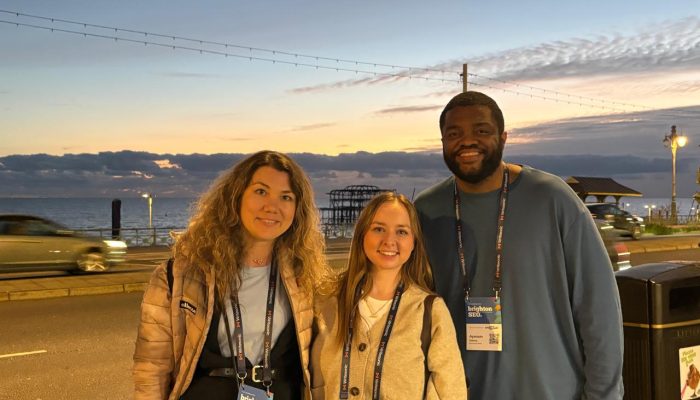
I came away from Marketing Week’s Festival of Marketing with pages of notes. Here are four talks that grabbed my attention. They all approach a similar theme but from different directions, which really helped crystalise my thinking.
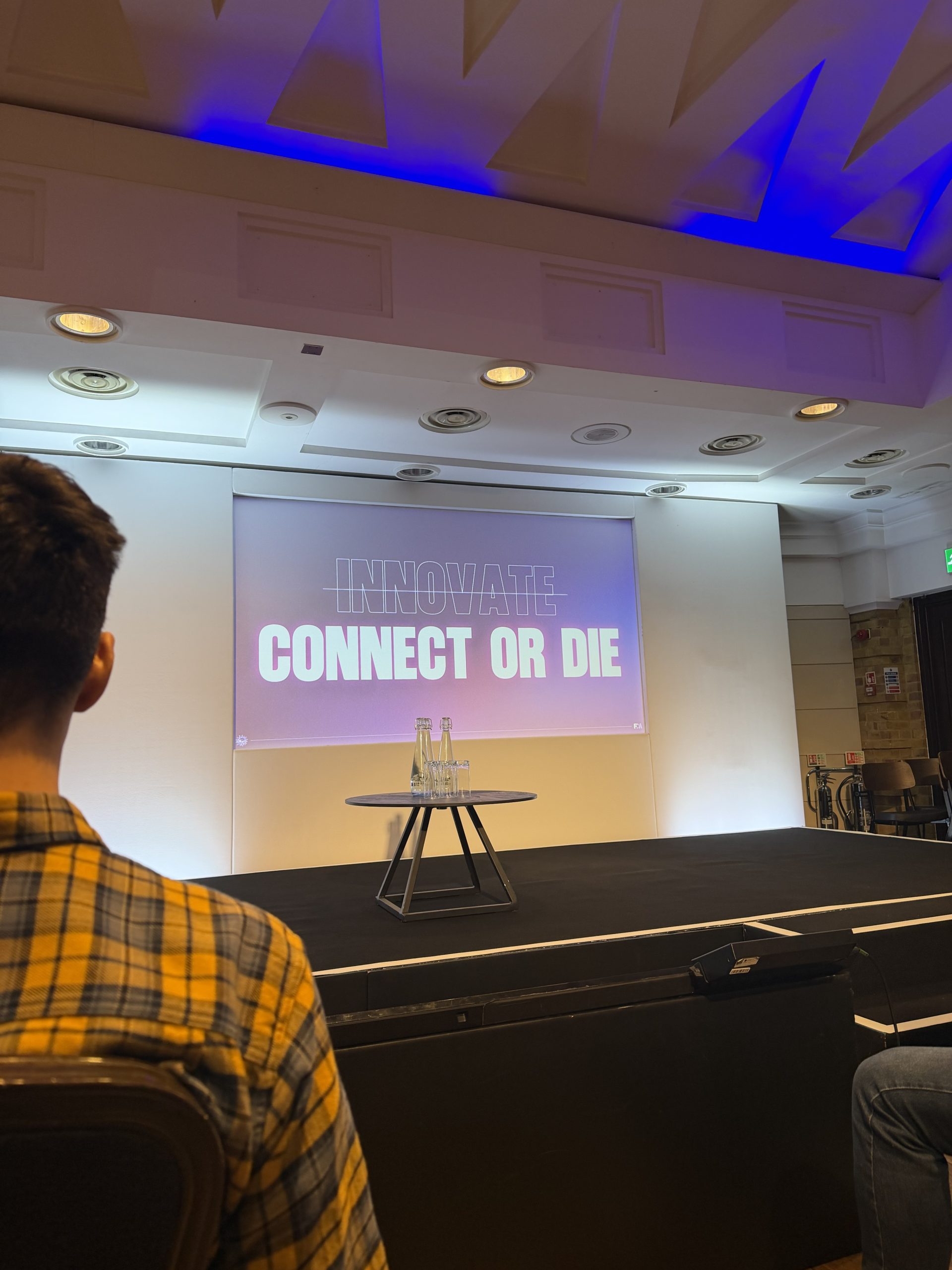

I came away from Marketing Week’s Festival of Marketing with pages of notes. Here are four talks that grabbed my attention. They all approach a similar theme but from different directions, which really helped crystalise my thinking.
Sir John Hegarty opened the festival with a stark observation: we’re living in an ocean of sameness, with people actively avoiding marketing. He discussed replacing the USP with an ESP, an emotional selling point. Taste, judgement and point of view are becoming more valuable, but they’re hard to measure, and that’s why so many businesses underinvest in them.
For Hegarty, the answer starts with truth. An idea becomes more powerful the more truthful it is, because it expresses something real that people recognise, rather than something that’s simply attractive or clever. In an ocean of sameness, truth cuts through.
AI makes this sharper. When everyone has the same tools, producing content is easy; standing out is hard. Hegarty asked how we stop the “digital landfill”. He argued that creativity is no longer a nice-to-have. We all need to be torchbearers, and it should be everyone’s business, from the board to the shop floor, and not just CMO’s or agencies. We’re now in the Creative Age.
Niel Bornman, CEO of Publicis Connected Media UK, argued that brands need fewer technology partners and simpler set-ups. “They should start using business metrics to solve marketing challenges, not the other way round”. An ethos we very much practise at Space & Time as a Growth Marketing agency.
On the surface, one talk was about emotion and creativity, and the other was about data and evidence. While they may have seemed like opposing arguments, I don’t think they conflict.
Connected data gives brands the confidence that they truly understand their customers. At its best, it’s a source of truth about them.
Taste and judgement inform what will resonate, and creativity is how you communicate that truth in a way people remember (see my badly drawn diagram below on Sir John Hegarty’s framework for assessing a good idea!).
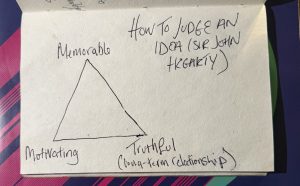
Without the data, creative bravery feels like a risk the board won’t sign off. Without creativity, data just optimises you towards everyone else.
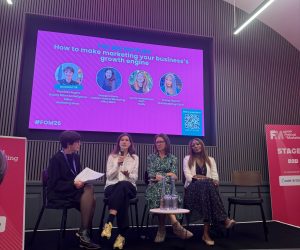
The panel ‘How to make marketing your business’s growth engine’, moderated by Marketing Week’s Charlotte Rogers with Georgie Burks (Allica Bank), Ifeoma Jibunoh and Lauren Berkemeyer (YuLife), made similar points from a B2B angle. Jibunoh shared a view that she often uses with wider stakeholders: ‘brand creates future demand; performance captures current demand’. A simple but very effective explanation of their purpose. Cut the first and the second dries up over time. Several of the panel questioned whether the split between brand and performance should exist at all, as both should be judged on business outcomes, not marketing metrics.
In a world where AI increasingly shapes how people discover brands, I’d go further. Consistency and credibility are what get you discovered, so brand is no longer a nice-to-have. This is something we have discussed at length at our recent Movers events and it informs the thinking behind our award-winning data transformation and reporting platform, Ignition: one connected view of what’s really driving growth (returns not metrics!); however, your brand defines it.
Hegarty said marketing has almost become a dirty word. The growth engine panel had a practical answer: marketing needs to explain why it matters, inside the business as much as outside of it. That means starting with the economics of growth, agreeing measures of success beyond sales, and showing up consistently. As marketers, we’re often better at telling our clients’ stories than our own.
The session I didn’t expect to connect to this thread was on the Leadership Stage. In ‘Navigating the madness’, Emma Harris, Chief at Glow London, argued that most of what goes on in our heads is on repeat. We think the same things, feel the same things and produce the same work, and good advice alone won’t break that loop.
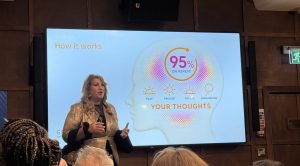
She challenged the room to ask what’s really driving our behaviour right now. For many of us, I suspect it’s FOMO.
Her advice was simple and uncomfortable: be present, quiet the noise, and stop attending so many meetings so you have time to think.
I think this is such an important part of creativity. Hegarty wants more creative thinking. Bornman wants more connected data and technology, with teams focused on solving real customer problems. The growth engine panel wants marketing to start with the economics of growth and take its own internal comms as seriously as its external comms, so everyone is pulling in the same direction. All three need something most of us don’t have a lot of: time. Agencies, in-house teams and clients are all running at 100 miles an hour. We’re busy, but busyness is how you end up in the ocean of sameness.
It’s a challenge I’m taking personally. Like many businesses, at Space & Time, we have a lot of important change in motion right now. My commitment is to keep the customer at the centre of it, and to keep asking the uncomfortable question: is this really adding value, or are we just moving fast?
At times it feels like we are just getting back to basics. The best marketing has always needed the courage to be different and the evidence to inform that strategy. What’s changed is that AI has made sameness the default, so standing out is harder but now business critical.
Truth is still what gives an idea its power, and taste is what makes people remember it. Putting creative thinking at the top of our agendas needs to be the priority. None of that happens at 100 miles an hour. The brands that win in the Creative Age will be the ones that connect the right things: data with ideas, brand with performance, and teams with the time to think.