Welcome back to Ahead of Times. This issue covers four moves shaping AI in marketing right now: OpenAI’s ChatGPT Ads Manager launches in beta, Microsoft’s AI Max upgrades paid search for a more conversational world, brands are increasingly showing up natively inside ChatGPT with their inventory now part of the AI experience itself, and the EU AI Act approaches its August enforcement milestone, with some obligations pushed back, but others still coming into force for any brand operating across Europe.

Ahead of Times – Issue #8
Paula Hijosa
AI & Performance Lead

AIIndustryMediaTechnology
anchor
ChatGPT self-serve Ads Manager launches in beta
OpenAI has launched its self-serve Ads Manager, currently in beta and available to U.S. Outside the US. Access outside the U.S. remains limited for now, with pilots running in Canada, Australia and New Zealand, and broader access typically restricted to selected agency and tech partners such as StackAdapt and Criteo. Expansion beyond these markets is expected soon, with the UK and other regions due to enter the pilot in the coming weeks, although details on access and whether self-serve will be included are still unclear.
Alongside the Ads Manager rollout, OpenAI has made two updates that start to bring ChatGPT closer to the standards advertisers expect from other platforms.
- CPC bidding has been added alongside CPM, giving advertisers the option to optimise for actions rather than just impressions, which is an important step towards making ChatGPT inventory work for performance objectives, not only awareness.
- Measurement tools have also been upgraded, with the launch of a Conversions API and pixel-based measurement to give advertisers a clearer view of what happens after someone engages with an ad.
Why this matters:
ChatGPT advertising is still early. However, the addition of CPC bidding and proper measurement is a significant step forward, as these were two of the biggest gaps preventing advertisers from treating it as a serious performance channel rather than an experiment. That said, OpenAI still has a long way to go to match the scale and sophistication of established platforms, so we should expect continued development and new features over time.
For UK and European advertisers, it’s still too early to plan properly without clarity on access, formats, measurement and minimum spend requirements. However, it’s a space to watch closely so you’re ready to move quickly once access becomes available.
anchor
Microsoft launches AI Max for Search
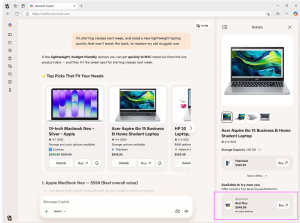
Microsoft has launched AI Max for Search campaigns (yes, same name as Google), an open pilot announced at its Spring Summit and rolling out from May. The feature uses AI to improve Search campaign performance through expanded query matching, asset personalisation and smarter URL routing across Bing and Copilot surfaces, including Copilot Search and Copilot Answers. Alongside it, Microsoft has introduced Offer Highlights, a new format that surfaces selling points such as free shipping or in-store pickup directly inside Copilot conversations, and an Audience Generation tool that turns plain-language descriptions of an ideal customer into targeting segments (currently in closed pilot in the US and Canada).
Source: Microsoft Advertising https://about.ads.microsoft.com/adobe/dynamicmedia/deliver/dm-aid–d6e0a6fc-bebf-47f3-a2b6-436fd137932a/blog-84097-bodyimage07-844×627.png?preferwebp=true&quality=85&width=1600
Why this matters:
This is a clear step towards making paid search work in a world where people are asking questions more naturally, and making decisions inside AI tools rather than on a traditional results page. For advertisers, it opens up new opportunities to reach those more conversational searches that keywords alone miss. Like with Performance Max and other automated formats, the accounts that will benefit first are the ones with solid foundations, clean conversion tracking, strong creative and landing pages that match intent. The basics still matter, and they’ll make or break how well this works.
anchor
Brands plug inventories into ChatGPT
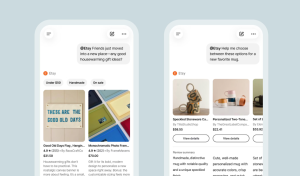
More brands are now integrating their inventory directly into ChatGPT, so users can browse and discover products within the AI platform itself. Zoopla has integrated all of its property listings into a dedicated Zoopla experience inside ChatGPT, letting users search through natural-language prompts, with results pulled directly from Zoopla and linking back to the site. Etsy works in a similar way, with shoppers able to tag @Etsy in a ChatGPT conversation to surface curated product suggestions from its 100 million listings, with clickable results that link back to Etsy for purchase. As Etsy put it: ‘ChatGPT works well as a discovery channel, shoppers come to Etsy to learn more before buying.’
Why this matters:
ChatGPT is fast becoming a genuine place for customers to discover brands, and the ones moving early are setting the template for how their categories show up inside AI. For advertisers and ecommerce teams, the focus is on how your product feeds, content and brand information are structured so that an AI can find, understand and recommend you. The brands that invest now in being well-represented inside these experiences will have a structural advantage when AI-driven discovery becomes mainstream.
anchor
EU AI regulation moves forward as UK pushes back
The EU AI Act’s next major milestone is coming into view. From 2 August 2026, most of the Act becomes enforceable, including transparency obligations and the broader enforcement framework. However, requirements for many high-risk AI systems are now expected to be delayed until August 2027 following recent updates, giving businesses more time to prepare.
Any business using AI in areas such as credit scoring, recruitment, or insurance underwriting within the EU still needs to get its governance, documentation and risk management in place. These systems fall into high-risk categories and carry significant compliance expectations and penalties.
Alongside this, Article 50 introduces transparency obligations. Companies must inform users when they are interacting with an AI system (unless it’s obvious), label AI-generated or manipulated content, and disclose the use of emotion recognition or biometric categorisation systems, with limited exceptions.
At the same time, UK tech ministers are pushing back against aligning with EU AI rules. They have warned that adopting EU-style regulation could slow the growth of the UK’s AI sector, reinforcing a growing divergence between the two markets.
Why this matters:
For any business operating across the UK and EU, the regulatory picture is about to get more complicated. The EU AI Act applies based on where the AI is used and who it impacts, not where the company is based, so if your audiences are in the EU, the rules apply, even for UK-based businesses.
Even where AI is not core to the product, Article 50 (about transparency obligations) has direct implications for everyday marketing use cases such as AI chatbots, AI-generated creative, voice clones, all of which will need clear disclosure when used inside the EU. The smartest move right now is not to wait for full clarity on the UK position, but to map where AI is already being used across your stack, who is accountable for it and what documentation exists. A divergence between the UK and EU would mean two compliance frameworks to manage, not one, and the brands that get ahead of this will avoid the scramble closer to the deadline.
Read our latest news and thoughts.

AI Adoption in the UK: What Gen Z, Millennials, Gen X and Boomers Are Really Using AI For
63% of all UK adults who use the internet have used AI ‘in the last month’, according to GWI’s latest quarterly survey (Q4 2025).
Fiona Booth
Research Director


AI Trends
5 AI predictions that will shape 2026
Paula Hijosa
AI & Performance Lead

AI and Copyright: Navigating the “Wild West”
Last week, Space & Time’s Heather Connearn joined a panel of industry experts (Mike Octigan, Sukanya Wadhwa, Stephen...
Emma King
Marketing Manager

5 ways AI is already saving time in campaign management
Discover how AI is revolutionising campaign management with five practical ways it saves time and enhances performance. From media planning and budget optimisation to creative generation and audience targeting, learn how AI tools are making a significant impact.
Paula Hijosa
AI & Performance Lead